Bowie, Maryland
Construction Debris Removal in Bowie, MD
Construction Debris Removal in Bowie, Maryland, with published load ranges up front, the volume confirmed on site, and the figure settled before loading begins.
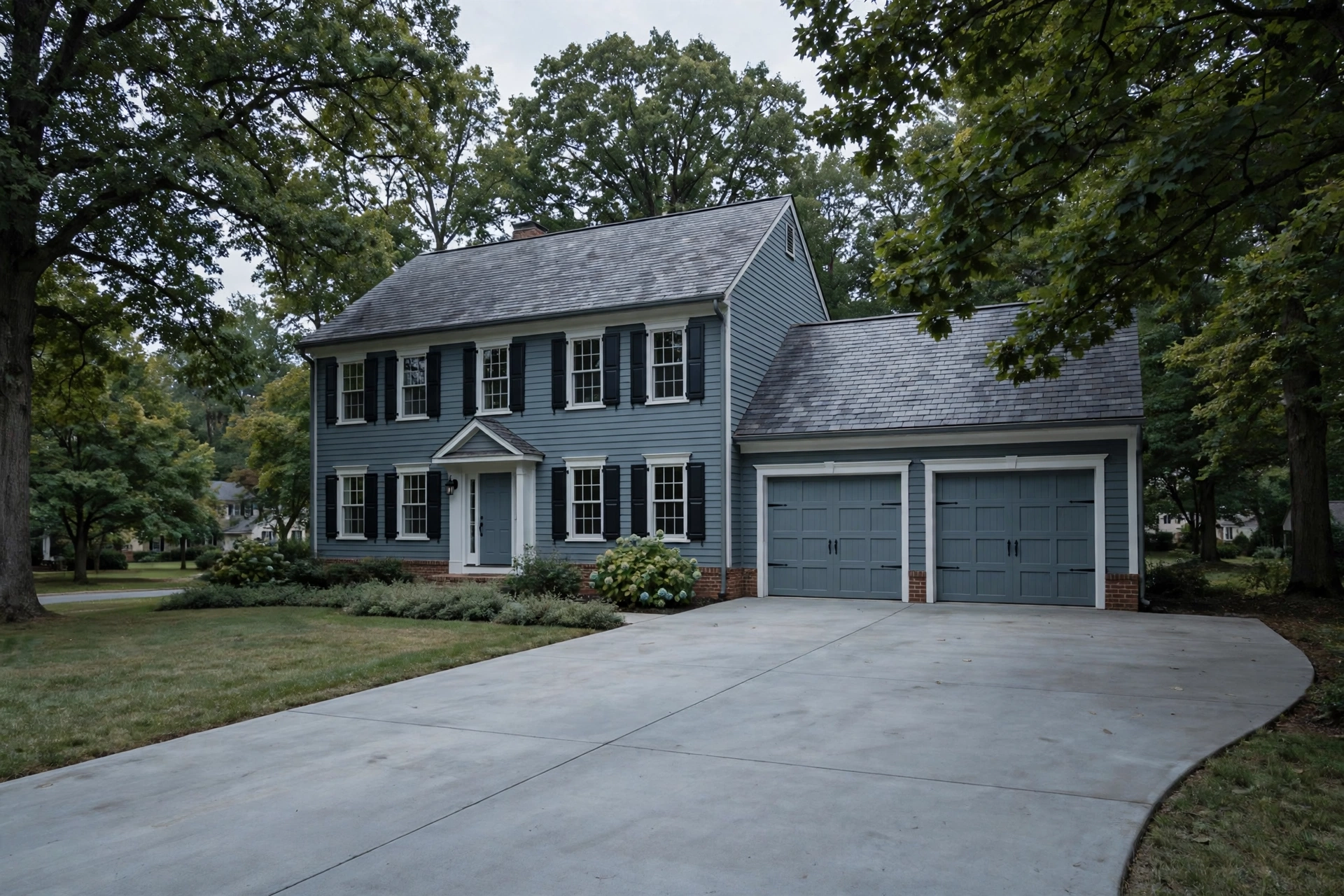
Bowie, Maryland
Construction Debris Removal in Bowie, Maryland, with published load ranges up front, the volume confirmed on site, and the figure settled before loading begins.
We remove construction debris for Bowie homeowners, landlords, and small contractors who need a work area cleared without renting and loading a container on their own. A kitchen gut in Collington leaves a very different pile than a bathroom refresh in Fairwood or a deck tear out behind a Belair rancher, and we plan each pickup around what is actually on the ground. You point to the pile. We lift it, carry it out, load it, sweep the space where it sat, and haul it away.
Remodel work stalls fast when debris takes over the driveway, the garage, or the only room with floor space left. Drywall offcuts lean against studs. Broken tile fills buckets nobody wants to lift twice. Old cabinets block the path the new cabinets need. Our job is to break that logjam so the build can keep moving.
Most of what we haul from Bowie remodels is ordinary torn out building material. That includes drywall and plaster, lumber and trim, flooring from carpet and pad to vinyl, laminate, and hardwood, plus roofing shingles in modest quantities from repair work. We also take sinks, tubs, toilets, vanities, cabinets, countertops, doors, windows, and fencing panels already taken down and staged for pickup.
The mix reflects the housing stock. The Levitt homes in Belair were built in the 1960s, and many are on their second or third kitchen and bath cycle, which means layers of flooring, heavy cast fixtures, and plaster in some rooms. Homes in Woodmore and Fairwood, built in the 1990s and 2000s, produce larger cabinet runs, more tile and stone, and deck material from outdoor projects at the end of their service life.
We handle non hazardous material only. Wet paint, solvents, chemicals, fuel, and any material you suspect contains asbestos or lead need a different route and are not part of this service. If part of a pile is questionable, tell us through the quote form before we arrive. Bagged rubble, concrete, brick, and dirt are weight driven loads, and we will be direct about how much heavy material fits a single pickup.
Some Bowie clients call us once, at the end. Others bring us in two or three times across a longer project, once after demo, once midway, and once when the last trim and packaging come off. Both patterns work. A mid project clearing often matters more than people expect, because a demo pile left in a garage for six weeks tends to collect everything else.
Tell us where the material sits and how we reach it. Debris staged in a driveway or garage loads fastest. Material still inside, down a basement stair in a Belair colonial or up in a second floor bath, takes longer to carry, and that access picture shapes the quote. We ask about stairs, narrow halls, finished floors that need care on the carry path, and gates that control how close we can stage.
We separate as we load where it makes sense. Usable leftover material in good condition can go toward a donation stream. Metal and other recoverable material can go toward a recycling stream. The rest goes to disposal through the Prince George's County landfill and transfer system.
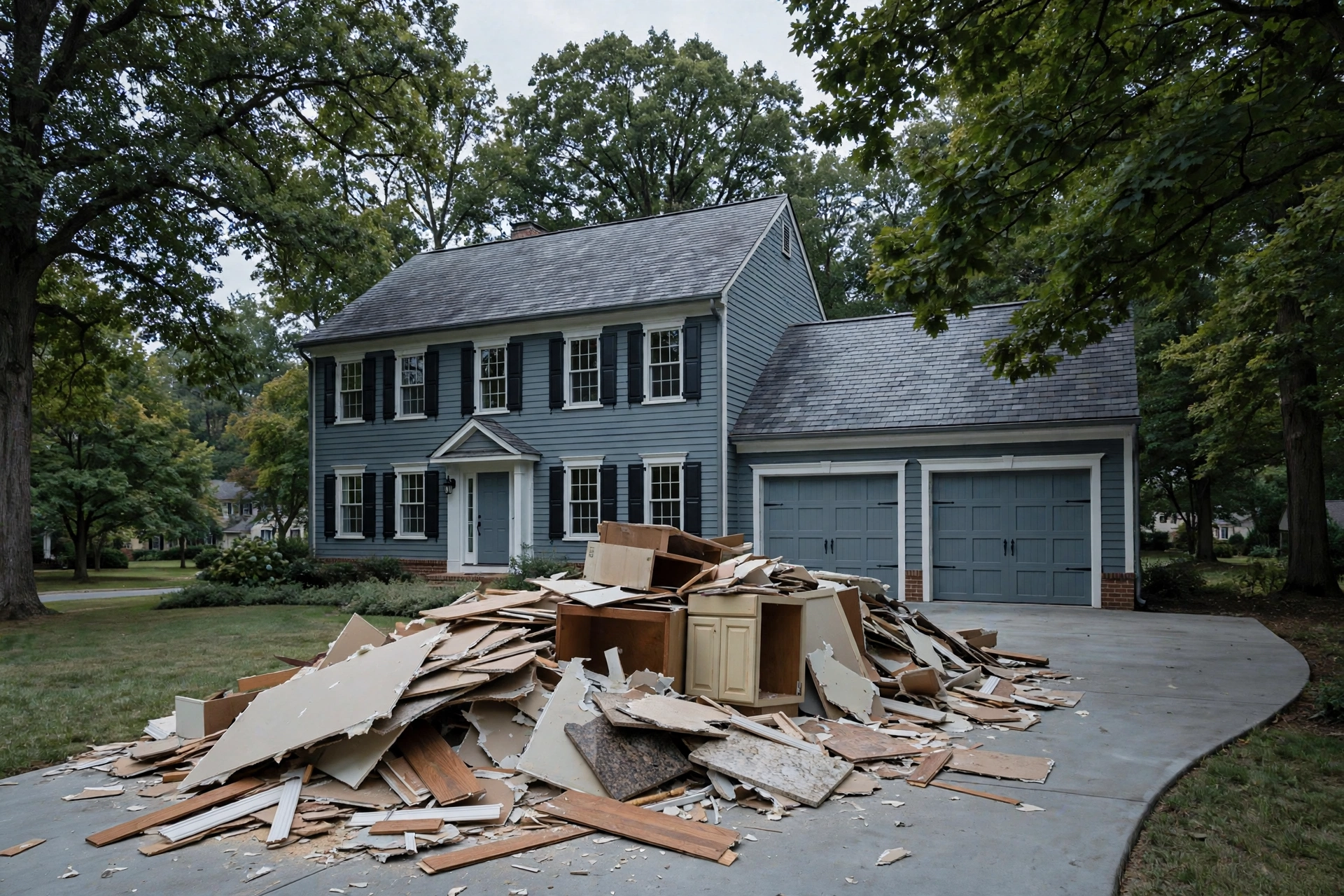
A Collington kitchen and dining room remodel had filled a two car garage with torn out cabinets, countertop sections, drywall, flooring, and bagged tile rubble. We carried everything out through the garage, separated the metal fixtures and clean cardboard as we loaded, and swept the full floor area once the last bags were out. The cleared garage gave the contractor staging room for the new cabinet delivery the following week.
Construction debris in Bowie is priced by volume and weight together, and debris is where weight matters most. A load of drywall and lumber fills space. A load of tile, concrete, or brick hits weight limits long before it looks full, and that is the biggest reason two piles that look the same size can price differently. County disposal fees are charged by weight, and those fees sit inside every load price in this trade, ours included.
No Bowie company publishes a full local price list, so we point to published market figures for context. One operator serving the region publishes pickup loads starting at $100. Regional operators publish minimums around $125, about $265 for a quarter load, and about $695 for a full load. Multi load jobs total as multiples of that load structure. For construction debris work in Bowie, most of our jobs fall between $295 to $685, with small staged piles near the low end and heavy mixed loads near the top. Total volume sets the base, weight pushes it, and carry distance, stairs, and staging all shape the final figure, which is confirmed once we see the pile in person.
We keep the process plain. You send the quote form with the project type, the neighborhood, where the debris sits, and your best description of what is in the pile. Photos help if you have them, because a photo of a garage pile tells us more about volume than a list of material names. We review the request, ask follow up questions where the picture is unclear, and schedule the pickup around your project timeline.
On the day, we walk the pile with you first. Anything that is not debris, tools, saved tile, a fixture you plan to reuse, gets pointed out and left alone. Misunderstandings on remodel sites usually start with an assumption about what stays, so we settle that before the first carry. Then we load, separate the streams as described above, and sweep the area where the material sat. We are Bowie based, we use the Prince George's County disposal system constantly, and we know how much longer an interior carry takes in a split level than in a rancher. That familiarity makes our scheduling and our quotes more realistic.
Published market figures give the frame. One operator serving the region publishes loads starting at $100, regional minimums sit around $125, a quarter load runs about $265, and a full load runs about $695. Our construction debris jobs in Bowie most often fall between $295 to $685, priced by volume and weight, with county disposal fees by weight inside the load price.
No. Bagging small material and stacking lumber helps loading go faster, but it is not required. Loose piles from garages, driveways, yards, and interior rooms are normal. If heavy rubble is loose, leave it as it is and describe it in the quote request.
Yes. We regularly carry debris out of kitchens, baths, basements, and upper floors while work is underway. Tell us about stairs, tight turns, and finished floors on the carry path in the quote form, and we will plan the route before loading starts.
We take non hazardous material only. Wet paint, solvents, chemicals, fuel, and suspected asbestos or lead material are outside this service. Dry, empty paint cans are a different case, and we can confirm those through the quote form.
A dumpster leaves the loading to you and sits in your driveway for days, and some placements raise permit questions handled in general terms through Prince George's County DPIE. With our service, we do the lifting and carrying, and the material leaves in one visit.
Yes. Many Bowie remodels use a staged pattern, with one pickup after demolition, another midway, and a final clearing for trim, packaging, and leftovers. Mention the project timeline in your quote request and we will plan the pickups as a sequence.
Tell us what is going and roughly how much of it there is. We read every request that comes in and respond with the load size your description suggests and the published market range for that volume.
Prefer to talk it through first? Send the form and we will call you back at the number you give us.